Live Skilled trades
Electrician Exam Prep
Journeyman & Master Electrician
Unlimited practice problems on the calculation topics that decide the Journeyman and Master exams, plus cited licensing guides for Texas, California, and Florida.
Ozen Test Prep builds practice problems the way careful exam writers do: from a template with realistic ranges, the same reference tables the exam expects you to use, and a real method behind every answer. Each time you ask for a problem the numbers change, so the only way to get it right is to understand how it works. Check your answer instantly, open the full worked solution when you're stuck, and keep going for as long as it takes.
Try one now
Electrician · Ohm's LawA circuit has a voltage of 24 V and a current of 4 A. Find the resistance (R).
Click New problem and the values change — the method doesn't. The full Ohm's Law calculator adds power and all four formulas.
Choose your exam
Each hub is laid out the same way, so once you know one you know them all: practice topics that generate unlimited problems with worked solutions, guides to how the exam itself is run, and a public sources page for every figure behind them. Hubs are added one at a time and built depth-first. One opens only when its reference data is verified and its core topics are covered properly, never as a thin page with a handful of sample questions.
Live Skilled trades
Journeyman & Master Electrician
Unlimited practice problems on the calculation topics that decide the Journeyman and Master exams, plus cited licensing guides for Texas, California, and Florida.
Live Engineering
NCEES Fundamentals of Engineering
Timed 110-question FE practice exams scored by NCEES section, with discipline guides, a 12-week study plan, and seven years of pass-rate data.
The method
If the numbers change every time, the only thing you can learn is the method.
Most exam-prep products are built around a fixed bank of a few hundred questions. Work through it enough times and your score climbs — but a good share of that climb is recognition, not skill. You start to remember that the conduit question with six 10 AWG conductors has a ¾-inch answer, and the day the real exam changes a single number, that memory is worth nothing. Licensing exams are written to defeat exactly this kind of preparation: they test whether you can apply a method to values you have never seen.
Ozen Test Prep is built the other way around. Every question starts as a template — a realistic scenario, the rules that govern it, and a sensible range for each value — and the numbers are drawn fresh each time you ask for a problem. The correct answer is computed from the same verified reference tables the exam expects you to use, and the worked solution is generated step by step from your exact numbers, so it always matches the problem in front of you. You can't memorize your way through it, which is the point.
In teaching terms, this moves practice up Bloom's Taxonomy — from remembering answers to applying and analyzing, the levels licensing exams actually measure. It also means you never run out. Your hundredth voltage-drop problem is as new as your first, so you can keep drilling a weak topic until the method is automatic instead of stopping because the bank ran dry. That matters most on calculation sections: on the Texas Journeyman exam, for example, 26 of the 85 items sit in a separately timed Calculations portion that has to be passed on its own at 70%.
How a practice session works
There is no course to enroll in and nothing to unlock. Each session is a short loop you can repeat as often as you like — on a lunch break, the night before the exam, or every day for a month.
Each exam hub is organized around the skills the exam actually tests. On the electrician hub that means voltage drop, Ohm's Law, conduit fill, and box fill — the calculation topics where candidates most often lose points. Start with the one you're least confident in; there's no required order and no curriculum to finish first.
Values are drawn from realistic ranges — wire sizes, run lengths, loads, and raceway types you would meet on the exam and on the job. Work it the way you will on test day, with your code book open if your exam is open-book, then enter your answer. It's checked against a small tolerance band, so rounding at a different step won't mark a correct method wrong.
Miss one and the worked solution walks through every step with the actual numbers from your problem: which table was used, which value came out of it, and how the formula was applied. Then ask for a new problem. Repeating a method with fresh numbers is how it moves from something you follow to something you simply know.
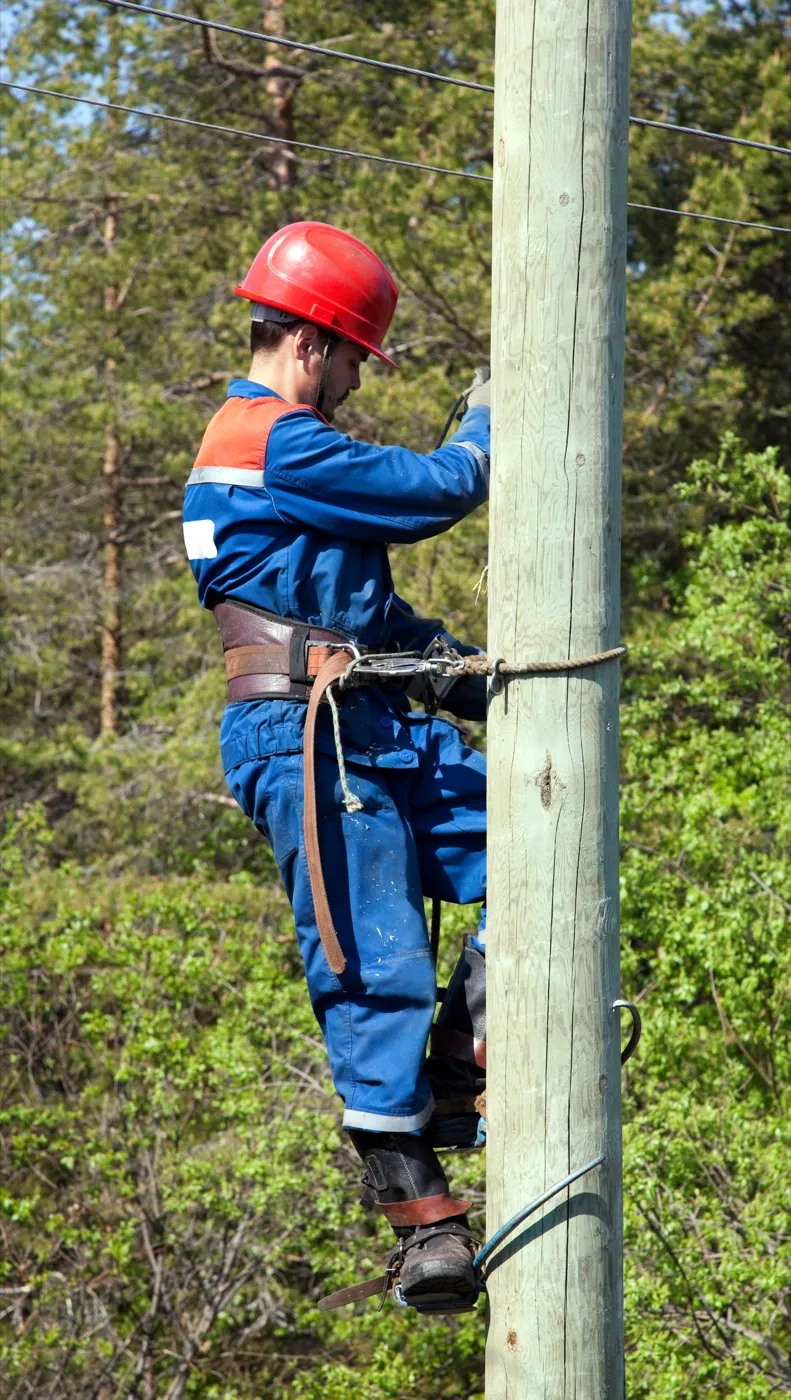
The first hub covers the calculation-heavy core of the Journeyman and Master Electrician exams, built on the National Electrical Code's own reference tables. Each calculator generates unlimited problems with worked solutions, and every table behind it is documented on a public sources page, so you can check the numbers yourself instead of taking them on trust.
Alongside the calculators, the hub includes state licensing guides covering the regulating board, exam vendor, question counts, passing score, fees, experience hours, renewal cycle, and adopted code edition — each fact cited to the official board or exam-vendor document it came from, with the date it was retrieved.
State guides: Texas California Florida
Open the electrician hub →Where the numbers come from
Texas Journeyman exam: 85 items over 240 minutes
Passing score: 70% on each portion
Code edition: 2026 NEC from September 1, 2026
Three of the 19 cited facts on the Texas guide.
A practice problem is only as good as the data underneath it. If a calculator pulls a wrong ampacity or conductor area, every problem it generates teaches the wrong answer with total confidence. So before any reference table is used, its values are cross-checked against independent published sources. On the electrician hub that covers conductor ampacity, conductor and raceway areas, box volume allowances, grounding conductor sizes, and motor full-load currents. Where a table was renumbered between code editions but its values stayed the same, the sources page says so, so you can match what you practice to the edition your state has adopted.
The same rule applies to licensing details, which change more often than code tables do. State guides cite the board or exam-vendor document behind each fact rather than a secondary blog, show when the source was retrieved, and say plainly when something could not be verified — New York and Pennsylvania, for example, license electricians locally rather than statewide, so they are not covered until each local authority can be checked individually.
We don't host copyrighted code-book text. Only the underlying factual values are used, the same way any code-reference tool works, and the full trail is published on each hub's sources page. If you ever find a number that doesn't match its source, that is a bug worth reporting, and it gets fixed.
Who builds this
Ozen Test Prep is built and maintained by Simon, a teacher whose work is designing exam questions. The template-over-question-bank approach comes straight from that work: a good question checks whether you can use a method, and the most reliable way to practice that is with questions you haven't seen before. That idea travels to any exam with a method behind it, which is why this is one site for many exams rather than a single-subject tool.
Simon is not a licensed electrician or engineer, and nothing here asks you to take a bio's word for anything. Technical figures are cited to their primary sources so you can check them yourself, and the site is honest about being new and independent — there are no invented reviews, user counts, or credentials on these pages.
FAQ
Still unsure about something? Get in touch — every message is read.